Interview prep
What to wear to an interview
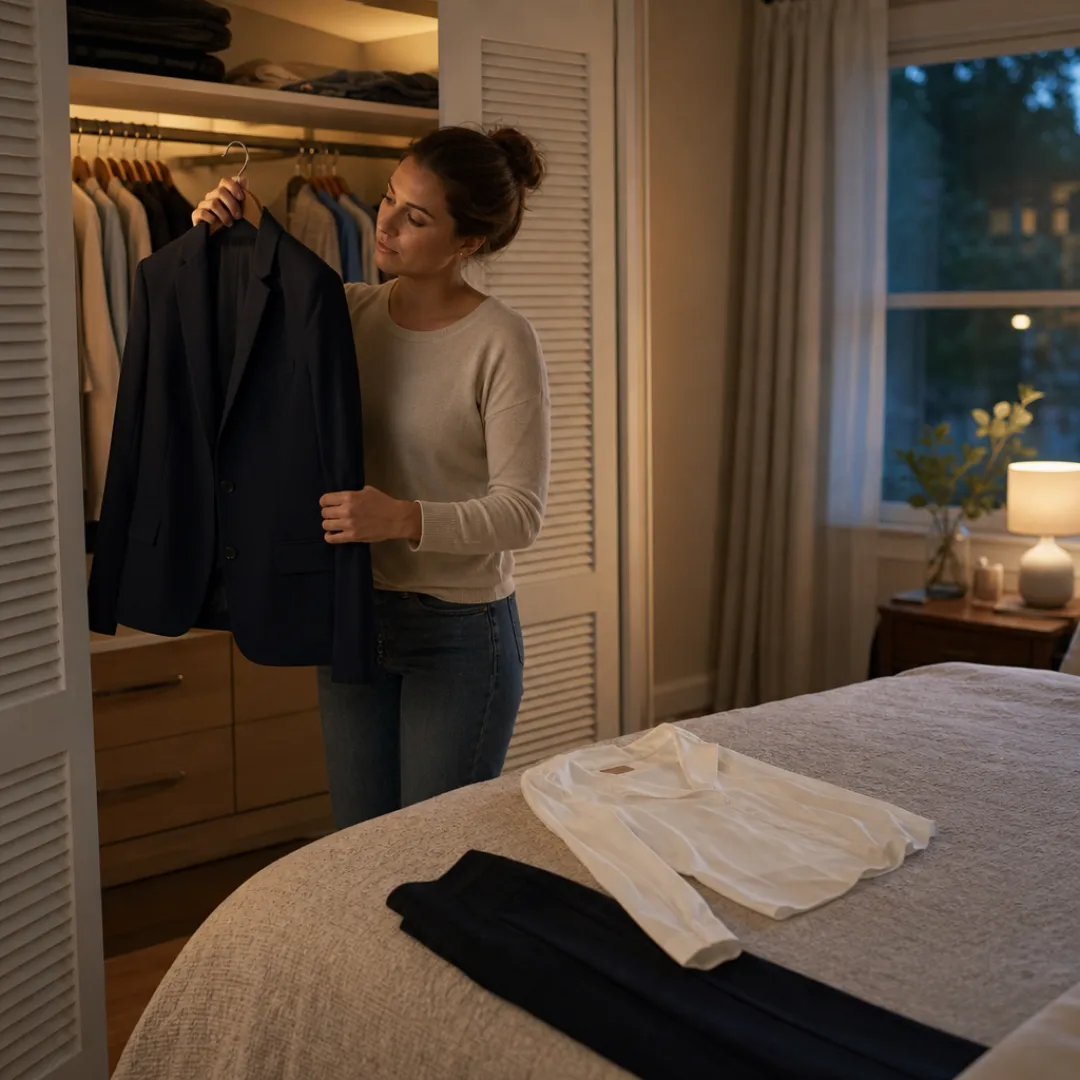
Dress one step above what people in that job wear every day, in clean, pressed clothes that fit. At a casual workplace that can be dark pants and a neat shirt or blouse. For business casual, navy or black dress pants with a cardigan or jacket. For a formal office, a dark suit. Lay it all out the night before.
How do you find out the dress code?
- 1
Ask the person who scheduled you
It's a normal question: “How do people on the team usually dress?” Coursera's guide suggests asking your interview contact by phone or email.
- 2
Look at the company's photos
Indeed and Coursera both suggest the company's website and social media, to see what people wear at work.
- 3
Then go one step up
UMass Dartmouth's career center says to plan on one step above the typical work attire for the role. If the team wears jeans and T-shirts, Coursera's example of one step up is non-denim pants and a tucked-in shirt.
- 4
Still not sure? Clean and professional
That's Indeed's advice when you can't tell. Even at a casual company, it says looking a little more professional than required can help.
What should you wear, by dress code?
-
Casual workplace
Dark jeans or pants, and a blouse, button-down or polo, or a knee-length skirt or dress. Add a cardigan if you like, and clean closed-toe shoes.
-
Business casual
Black or navy dress pants, or a knee-length dress or pencil skirt, with a button-down or blouse and a cardigan or jacket. Flats, heels, oxfords or loafers. Indeed suggests dressing up a little more if the role is client-facing.
-
Business formal
A dark suit, or a tailored dress or skirt with a matching jacket, closed-toe shoes and simple jewelry. UMass Dartmouth lists navy, gray, charcoal, taupe, pewter and black as suit colors for formal industries.
-
Creative roles
More room for color and personality. Coursera says bolder colors and distinctive styling can work in creative and fashion roles, as long as the look stays neat and fits well.
-
Video interviews
The same standard as in person, head to toe, says Coursera. Solid colors or subtle patterns and simple accessories work best on camera.
What should you not wear to an interview?
-
Gym, beach or weekend clothes
Coursera's list: graphic T-shirts, hoodies, athletic wear, ripped jeans, shorts, and flip-flops or casual sandals.
-
Anything that doesn't fit
UMass Dartmouth notes that clothes that are too large can look messy, and clothes that are too snug look ill-fitting.
-
Pet hair, holes, stains or wrinkles
Indeed says these can pull the interviewer's attention away from your credentials. Press or steam your clothes the day before.
-
Strong cologne or perfume
A strong scent can distract the interviewer, and some people are allergic, Indeed notes. Go light or skip it.
-
Loud prints and neon
Coursera and UMass Dartmouth both prefer solid colors or subtle patterns. Navy, black, gray, white, beige and other muted shades are safe choices.
Tattoos and piercings. The advice differs. Indeed says many employers accept visible tattoos and suggests checking what's normal in your industry. UMass Dartmouth's career center tells students to cover them. If the dress code check didn't settle it, look at the team in the company's own photos.
What should you do the night before?
- 1
Lay out the whole outfit
Indeed suggests laying out or hanging up the outfit the night before, so you can check that everything goes together.
- 2
Press it and check it
Iron or steam anything wrinkled, and look for pet hair, holes and stains.
- 3
Check the weather
Pick clothes for the season and the forecast. Indeed's example: skip sandals if it's raining.
- 4
Plan the trip
Know how long it takes to get there and leave extra time for traffic. CareerOneStop suggests arriving 10 to 15 minutes early.
Dressed for it? Now practice what you'll say
Paste the job posting. An AI interviewer asks questions written for it, follows up on thin answers, and scores you on five skills.
Your free mocks show the score. The Interview-Ready plan shows you how to raise it.
- As many scored mocks as you want, in every round
- Why you lost points on each skill
- Your weakest answers rewritten, with why the new version scores higher
$49 a month. 14-day refund from your account. See the plan
More in job search
- How to respond to an interview request Reply templates to accept, give times, reschedule or ask what to expect, then a countdown to the day.
- How to prepare for an interview What to practice first, and six ways to practice compared on cost and feedback.
- Thank-you email after an interview Five templates to copy, when to send, and how to follow up when nobody replies.
- Interview tomorrow? A plan for tonight when the interview is in the morning.