A sample scorecard
A real interview ends with a yes, a no, or silence, and none of them tell you which answer cost you. This is what you get back here instead, reproduced in full so you can read one before you record anything.
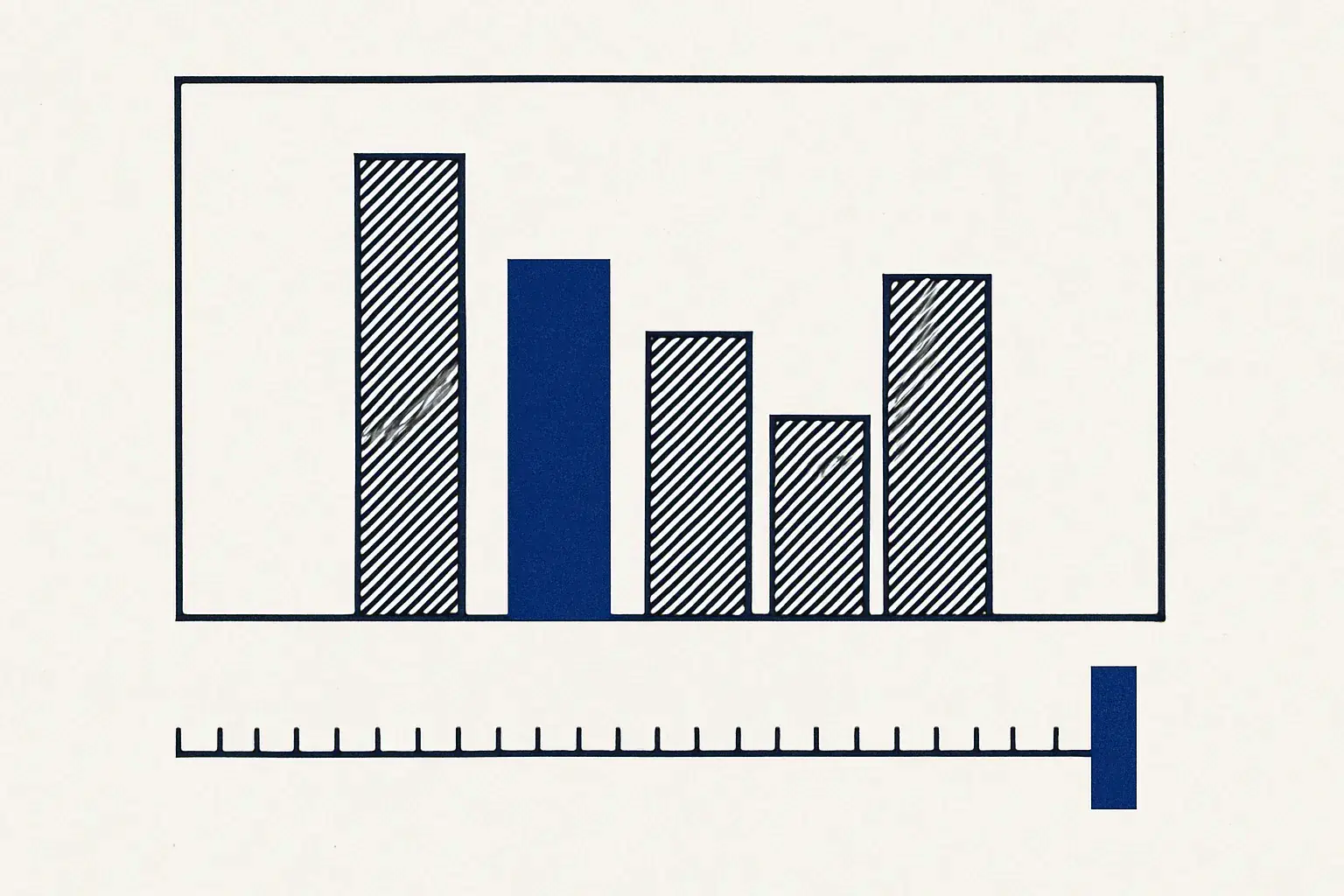
Sample scorecard
Three of your six answers stopped before they reached a result.
58/100
NearlyScored against the rubric below. Not compared to other users, and not a prediction about any hiring decision. Graded by an AI model from the transcript only, not by a person.
The rubric
Little repetition, and the question is not restated before answering.
First-person decisions are clear in four of the six answers.
Three answers set up a situation and stopped before the result.
Values language throughout; no cost, client, deadline or trade-off named.
One number across the whole run, and it was a date.
Timed delivery
Your browser measures these while you record, and no AI model judges them. They show what a hard timer does to an answer, which is the part of a one-way screen that catches people out.
Prep window used
26s of 30s
You used the prep window on every question.
Time used of the cap
1:52 of 3:00
Comfortably inside the cap.
Dead air at the end
7s on Q4
Silence between your last word and the end of the take.
Takes cut off by the timer
1 of 6
The timer stopped these takes. On a real screen that is what the reviewer sees.
Question by question
| Q | Prep | Take | Dead air | Words/min |
|---|---|---|---|---|
| 1 | 28s | 96s | 3s | 129 |
| 2 | 30s | 121s | 5s | 118 |
| 3 | 24s | 88s | 2s | 134 |
| 4 | 22s | 74s | 7s | 111 |
| 5 | 30s | 180s (cut off) | 0s | 108 |
| 6 | 22s | 113s | 4s | 122 |
A dash means we did not measure it. Typed answers have no dead air to measure, and a take under ten seconds is too short for a words-per-minute figure to mean anything.
What to change, and what to say instead
Question 4 · Structure
Describe a time you had to change your approach part-way through a piece of work.
You said “so we ended up rebuilding the model” and then moved to the next point. The answer never says what the rebuilt model produced, so a reviewer has your process and no outcome.
Your material, re-cut
The forecast we inherited double-counted a revenue line, and I found it in the second week. I rebuilt the model from the source ledger rather than patching it, and I flagged the gap to the team lead the same afternoon. The rebuilt version came back [the result here: you have it, we do not], and it is the one the team used for the rest of the engagement.
Anything in square brackets is a gap we could not fill. You did not say it, so we did not make it up. Put your own number or name in before you use this.
Question 2 · Specificity
Tell us about a time you used data to make a recommendation.
The recommendation is clear and so is what happened to it. The only figure in the whole answer was the month, so there is nothing here a reviewer scoring specificity can hold on to.
Your material, re-cut
I pulled [how many] months of order data, because the weekly report and the finance ledger disagreed. The gap was [the size of it: you said “quite a bit”, so put your own number here], and it came from returns being counted in the week they were requested rather than the week they were refunded. I recommended we report both dates, and the template changed the following week.
Anything in square brackets is a gap we could not fill. You did not say it, so we did not make it up. Put your own number or name in before you use this.
Do one thing next: Specificity
Retake question 4 in forty seconds and open with the number the rebuilt model changed, before any of the setup.
On a real scorecard this is a button: forty seconds, one question, free, and it does not change the score above. One question is not enough evidence to move a five-dimension number.
What this score is not
- Your face, your eye contact, your posture and your background. We never see them. The video stayed in your browser.
- Your accent, your voice and your tone. We grade the words the transcript captured, not the sound.
- Whether any employer would hire you. Nothing here is a prediction about a hiring decision.
- Not affiliated with any employer or with any interview vendor. In a real run the questions are built from the competencies that employer publishes.
The example above is written, not screenshotted, so a screen reader reads it in the same order a sighted reader sees it, and so it can be quoted and linked. A real one is built from your own transcript and your own timings.
What on this page is real, and what is invented
The distinction matters more than the example does, so it is spelled out rather than implied.
- RealThe rubric. Five dimensions (structure, commercial awareness, ownership, specificity, concision), each out of 20, summing to a score out of 100. That is the rubric a real run uses, and the bands are the real bands: 70 and above is “At the bar”, 45 and above is “Nearly”, below that is “Not yet”.
- RealThe four delivery measurements and the sentences under them. Those captions are the exact ones the code writes for readings like these, and on a real run every one of the numbers is taken in your browser while the clock runs.
- RealThe shape of the document: rows sorted strongest first, at most three fixes, each with its rewrite attached, one drill, and the list of what the score is not. That list is quoted word for word from the code.
- RealThe rule about square brackets. A rewrite never invents a fact into your answer. If you did not say the number, the rewrite leaves you a gap and tells you to fill it.
- InventedThe answers, the diagnoses, the two re-cuts, the drill and the two questions quoted above them. They were written for this page to show the format. In a real run the questions come from the set on the employer page you picked, each carrying the source it came from and the date we read it.
- InventedThe timings. They are plausible values in the real format, chosen so the per-question table and the four headline figures agree with each other, the way a real run's would.
What this score can and cannot tell you
It is one reading of one run, by a model, from a transcript. The grader never sees your face, never hears your voice, and is told to score the words only. That is a genuine limit and it cuts both ways: a warm delivery earns nothing here, and a nervous one loses nothing.
It does not predict anything. No score on this site is a forecast of what an employer will do. What practice changes is how an answer comes out when the clock is running, and the one thing you can check yourself, in half an hour, is whether your own score moves between the first run and the second.
The delivery numbers are the ones to act on first. Dead air, a take the timer cut off, a prep window you did not use: those are facts, not judgments, and they are the failure modes a one-way screen punishes hardest. They are also the ones you cannot see when you practice by talking to yourself.
This is preparation software. It is not for use while a real assessment is running, and several of the employers covered here publish exactly that line themselves.
How our rubric relates to any employer's. It does not, and cannot. Ours is a finance and consulting answer-quality rubric of our own design. It is not a model of anybody's screening algorithm, and no score here predicts a score there.
Whether the employer scores with AI at all. HireVue's platform supports both AI-scored and recruiter-reviewed interviews, and employers do not say which they use.
Or read what gets asked and how it is scored, or how long you get to answer, first.
NailedIt.ai is not affiliated with, endorsed by, or connected to HireVue, Inc. or any employer named on this site. HireVue is a trademark of its owner and is used here only to describe the product this page is about. Nothing here is legal advice.