Get better at job interviews with an AI interview coach
Paste a job posting and answer out loud. The AI asks questions written for that role, scores your answers, and shows you how to fix the weakest ones.

What's at stake
Watch this before your next interview. 46 seconds, sound on.
Voiceover: AI. Sources: Ashby, April 2026; U.S. Bureau of Labor Statistics, August 2026.
Read the transcript
What's at stake in your next interview? Interviews are rare. About 1 in 20 applications gets one. And only about 1 in 10 interviews ends in an offer. Blow one, and it's 20-plus more applications for your next shot.
Every week of searching costs you a week of pay. 1.9 million Americans have been out of work for more than six months.
The interview is the part you control. So don't walk in cold. NailedIt's AI interviewer asks you questions out loud, and follows up. Then AI scores every answer, and shows you how to fix the weakest ones, before the real thing.
Practice the interview. Out loud.
How it works
-
Paste the job posting
Or just type the job title. The AI reads the duties, skills and level it asks for and writes your questions from them.
-
Answer out loud
The AI interviewer asks, listens, and follows up on the thin part of your answer, like a real interviewer.
-
Get your score
You are scored on five things interviewers listen for, and your weakest answers are flagged, so you know exactly what to fix.
-
Fix the weak answers
See each weak answer rewritten, why the new version scores higher, and drills for what you missed. Then run it again.
The recruiter screen, and its traps
Before any hiring manager, a recruiter calls. Some questions are there to corner you. Practice them out loud with an AI recruiter.
“What are you making now?”
Don't say“I'm at 118.” Your old pay becomes the anchor for the offer.
Say“I'd rather focus on what this role pays. From my research, I'm targeting [your range].”
“Why are you leaving?”
Don't say“My manager is a mess.” Recruiters pass on complaints, true or not.
Say“I want [what you want next], and this role is built around it.”
“What's the lowest you'd take?”
Don't say“I could do 130.” You just lowered your own range.
Say“I'm targeting [your range], and I'm looking at the whole package.”
What you get after every mock
Your score on five skills interviewers listen for, then your weakest answers rewritten. This is an example with a made-up candidate, in the real format.
61/100
Two answers described the situation and never reached the result.
Spoke to this job, not jobs in general.
Steady pace; two answers trailed off.
Escalated at the right moment.
Two answers never reached the result.
One number in the whole interview.
Also measured from your transcript: seconds per answer, words per minute, filler words.
“Tell me about a time you had to explain something complicated to a patient.”
What you said
“I had a patient going home on insulin who didn’t really get it. I explained it in simple words and showed her the pen, and she was fine.”
Why it fell flat: the story is there, but it stops before the part that proves it worked. There is no moment you checked, and no result.
Say it like this
“A patient going home on a new insulin pen could not tell me her dose back. I stopped the discharge teaching, explained it again in plain words, and had her show me each step on the pen herself. By the time she left, she [what she could do on her own, and how you checked].”
Why that version scores higher
- It keeps your story and adds the moment you noticed it was not working, which is the skill being tested.
- It shows what you did, step by step, in the order you did it.
- It ends on a result the interviewer can picture. The highlighted part is yours to fill in with what really happened.
Works for any job
Paste any job posting, or pick a role to practice its interview.
Have a HireVue or one-way video interview?
In a one-way video interview, nobody is on the other end. A question appears on screen, you get about 30 seconds to think, then you record one answer against a timer.
Practice that exact format here: the countdown, the single take, your camera on. Then get scored on what you said.
Practice a one-way video interview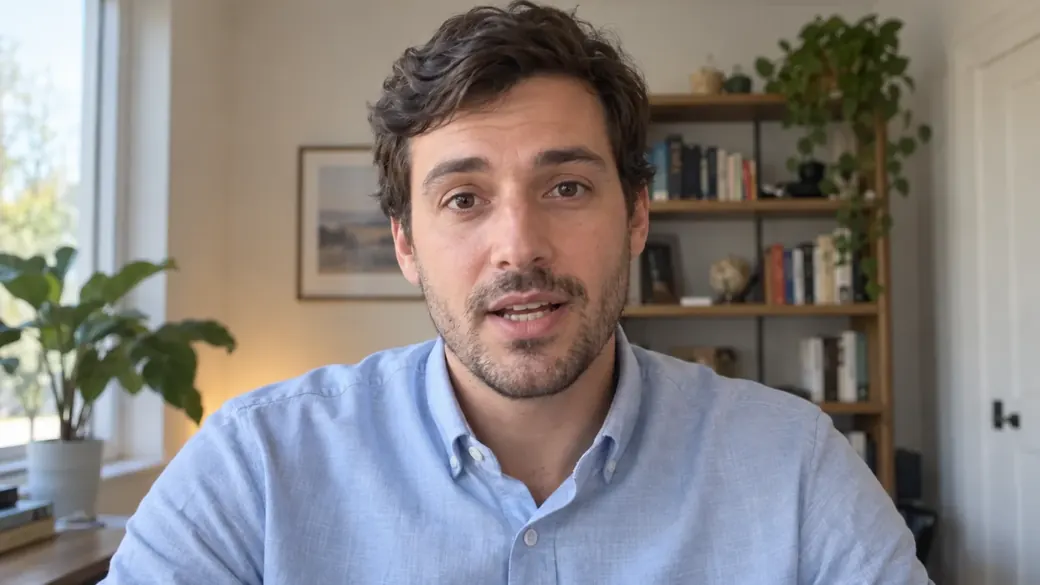
Free to start
Your mock interviews and your scores are free. Pay only when you want the coaching.
Free
$0
- Two scored mock interviews
- Your overall score and all five skill scores
- Every question and your full transcript
- No card. No signup until your scorecard is ready.
Monthly plan
$19/month
Billed monthly. No yearly commitment.
- As many scored mocks as you want, every month.
- Why you lost points on each skill
- Your weak answers rewritten, with why the new version scores higher
- Drills and coaching for what you missed
Cancel from your account page. The next month is not charged. 14-day refund from a button on your account.
Why practice out loud
11.4 weeks
The median length of unemployment in the US. At median weekly pay for a bachelor’s degree, each extra month out of work costs about $6,500.
US Bureau of Labor Statistics, 2026
2×
Interviews with set questions and a scoring guide are more than twice as good at predicting how someone will do the job as a free-form chat. That is how more employers interview now, and why NailedIt scores you against fixed criteria instead of a general impression.
Sackett, Zhang, Berry & Lievens, Journal of Applied Psychology, 2022
Questions people ask first
- Does practicing with an AI actually make you better at interviews?
- Practice with feedback does, in controlled studies: people who practiced with a simulated interviewer that gave feedback did better in a later mock interview and felt less anxious about interviewing (Langer et al., 2016). Nobody can promise you a job offer, and we won't. What you will see is whether your own answers improve, because every mock is scored on the same rubric.
- Can't I just read up on common questions?
- Reading helps you plan, but the interview tests whether you can say it out loud, on the spot. In an MIT study, students who watched interview-tip videos did not improve in blind ratings by career counselors, while students who practiced with an automated coach and got feedback did (Hoque et al., 2013). Words you say out loud are also remembered better than words you only read (MacLeod et al., 2010).
- Is the interviewer a real person?
- No. The interviewer and the grader are AI, and every screen says so. Anthropic’s Claude asks the questions and scores the transcript, Groq turns your voice into text and steps in when Claude is busy, and OpenAI speaks the questions out loud.
- Can an AI grade me fairly?
- The grader reads the transcript of your interview and scores five skills from 0 to 100, on a public rubric that stays the same every time. It does not judge your face, voice or accent. It is still AI and it can be wrong, so every scorecard comes with your full transcript to check it against.
- Will the questions fit my job?
- Paste the job posting and the AI writes questions from the duties, skills and level it names; if you only have a title, type that. Nobody outside the company knows the exact questions, so these are practice questions for that kind of role, and the interviewer follows up on what you say.
- Does it cover the recruiter screen and the salary question?
- Yes. Pick Recruiter screen before you start. An AI recruiter asks why you're looking, what you want next, your salary range and your timing, including the follow-ups meant to corner you, like what you make now. Your scorecard shows what the recruiter heard and what to say instead.
- Why is the interviewer so tough?
- It is set to push harder than a real interviewer, on purpose. It asks for the number or the moment behind a claim and keeps pressing, because follow-up questions are where vague answers come apart. Anxious candidates tend to score lower in interviews (Powell et al., 2018), so this is the place to practice under pressure, where a rough answer costs you nothing.
- Why not just practice with ChatGPT or a friend?
- You can. Honest feedback is the hard part: general AI chatbots tend to tell people what they want to hear (Sharma et al., 2023), and a friend who likes you will usually go easy. Here the interviewer is set to push, and every answer is scored on the same five skills, so you can see which ones are costing you points.
- What happens to my recording?
- In the mock interview, your voice is turned into text and the audio is not kept. Your transcript and scorecard are kept for 90 days so you can come back to them. Privacy policy.
- How do I cancel, and can I get a refund?
- Cancel from your account page. The next month is not charged. Billing is monthly, with no yearly commitment. For 14 days after your first payment, a button on your account page refunds it, no reason asked.
Your next interview is coming. Practice it first.
Free to start. Your scorecard is ready the moment you finish.
Start my free mock interview