DALL-E 3 vs FLUX Pro for Photorealism: Which Generates More Realistic Images?
Scores for photorealism
Strengths & Weaknesses
- Consistent composition and framing across generations
- Good at following complex multi-element prompts accurately
- Reliable color accuracy and white balance
- Handles human faces without major distortion
- Noticeable AI-generated quality in skin textures
- Lighting often looks staged rather than natural
- Limited to 1024x1024 — insufficient for large-format photorealistic work
- Bokeh and depth-of-field effects look artificial
- Near-photographic skin textures and hair detail
- Natural-looking lighting with realistic shadow falloff
- Convincing bokeh and depth-of-field effects
- Higher resolution output enables cropping and zooming
- Better at rendering reflective and translucent materials
- Occasionally over-smooths skin in portrait shots
- Requires more specific prompting for consistent results
- Can produce slightly oversaturated colors in nature scenes
Prompt Tests
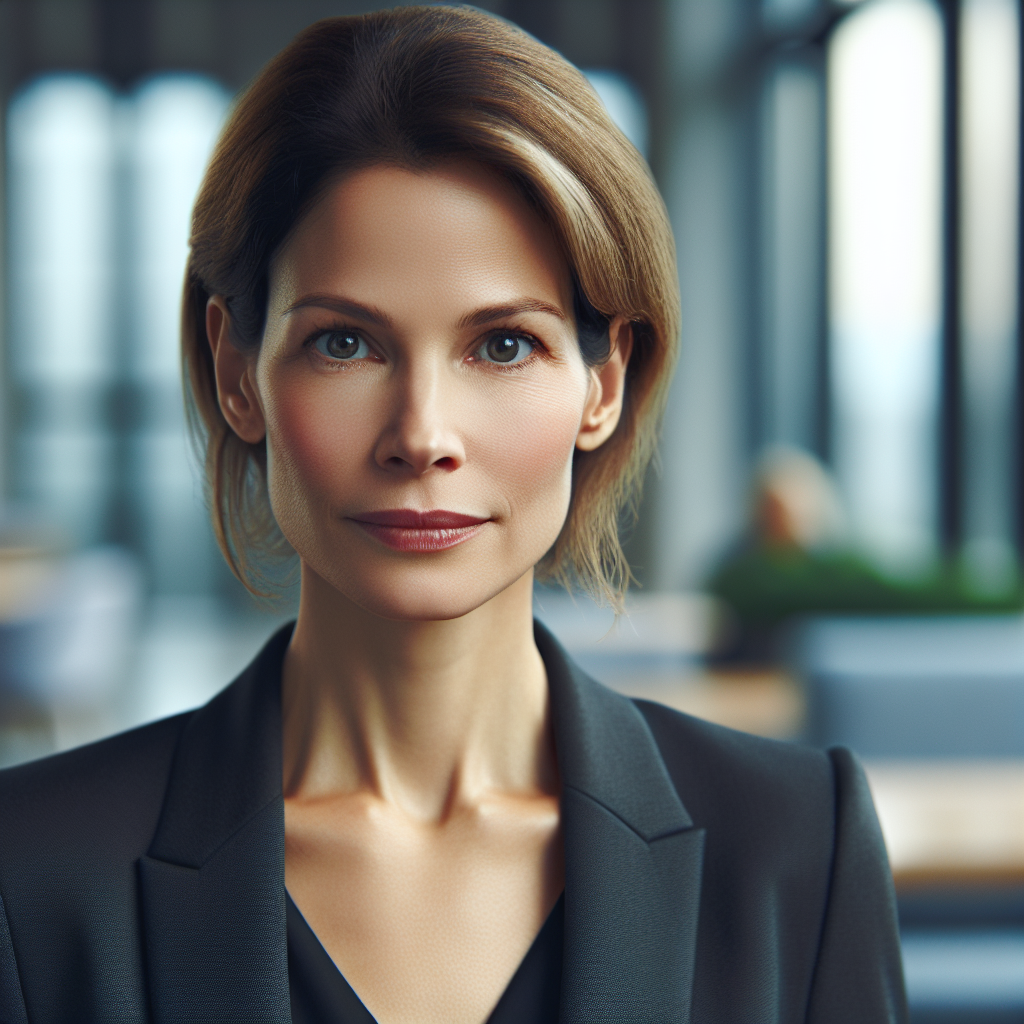
"A professional headshot of a 35-year-old woman in a modern office, natural lighting, shallow depth of field, 8K quality"
DALL-E 3: Clean composition with correct office setting. Face proportions accurate but skin has a slightly waxy, smoothed-over quality. Lighting is even but lacks the natural falloff you'd see in a real photo. Bokeh present but looks digitally applied.
FLUX Pro: Strikingly photorealistic. Natural skin texture with visible pores, realistic hair strands catching light individually. Office background has convincing bokeh with proper depth gradation. Lighting has natural directional quality with soft shadow under chin.
Why Tie wins: FLUX Pro produced an image that could genuinely be mistaken for a real headshot. The skin texture, hair detail, and natural lighting are significantly more convincing than DALL-E 3's slightly polished output.
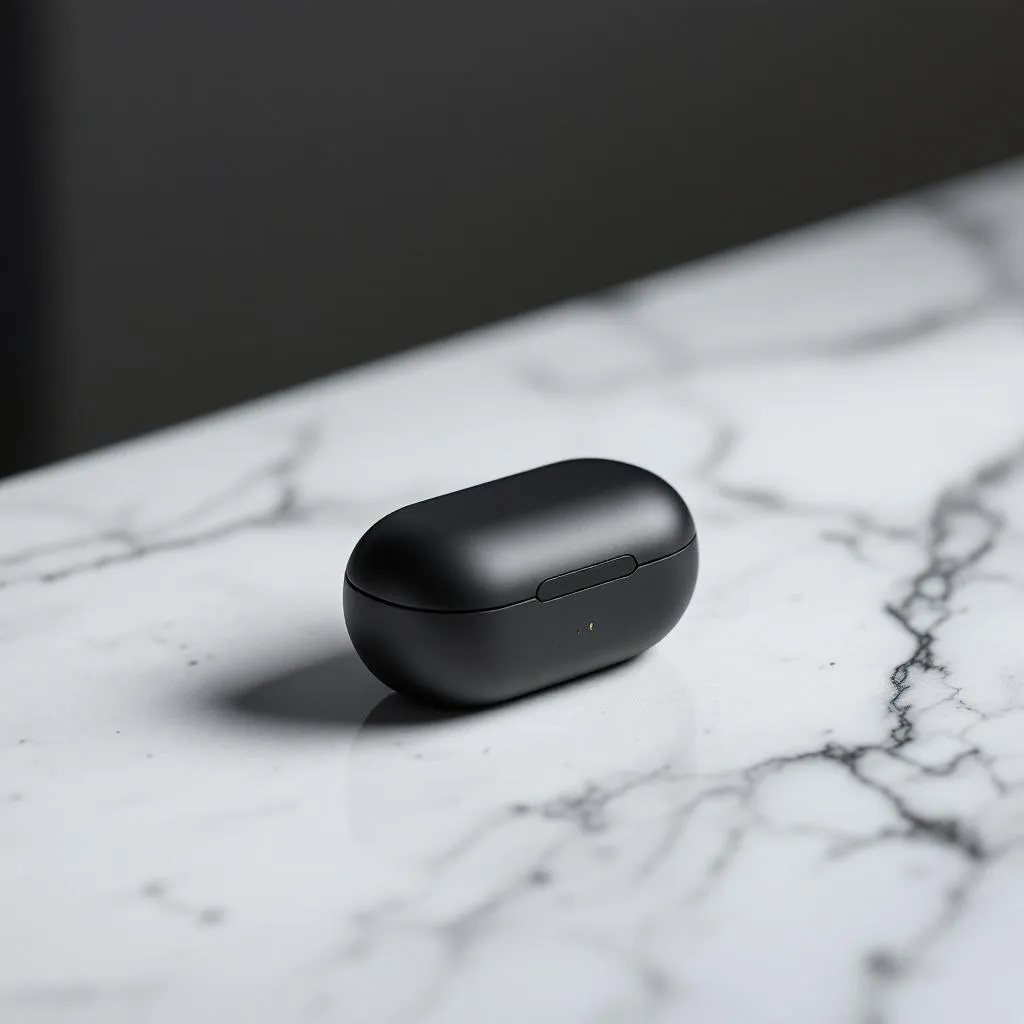
"A sleek matte black wireless earbud on a white marble surface, studio lighting, product photography, minimalist composition"
DALL-E 3: Good product placement and composition. Marble texture is recognizable but simplified. Earbud shape is accurate. Lighting is flat — lacks the specular highlights and subtle reflections that define studio product photography.
FLUX Pro: Excellent product shot. Matte black material rendered with accurate light absorption and subtle edge highlights. Marble veining looks natural with proper translucency. Studio lighting creates convincing specular highlights on the earbud's glossy accents.
Why Tie wins: FLUX Pro nailed the material rendering — the matte vs glossy distinction on the earbud, the marble translucency, and the studio lighting setup all look professional. DALL-E 3's version looks like a 3D render rather than a photograph.
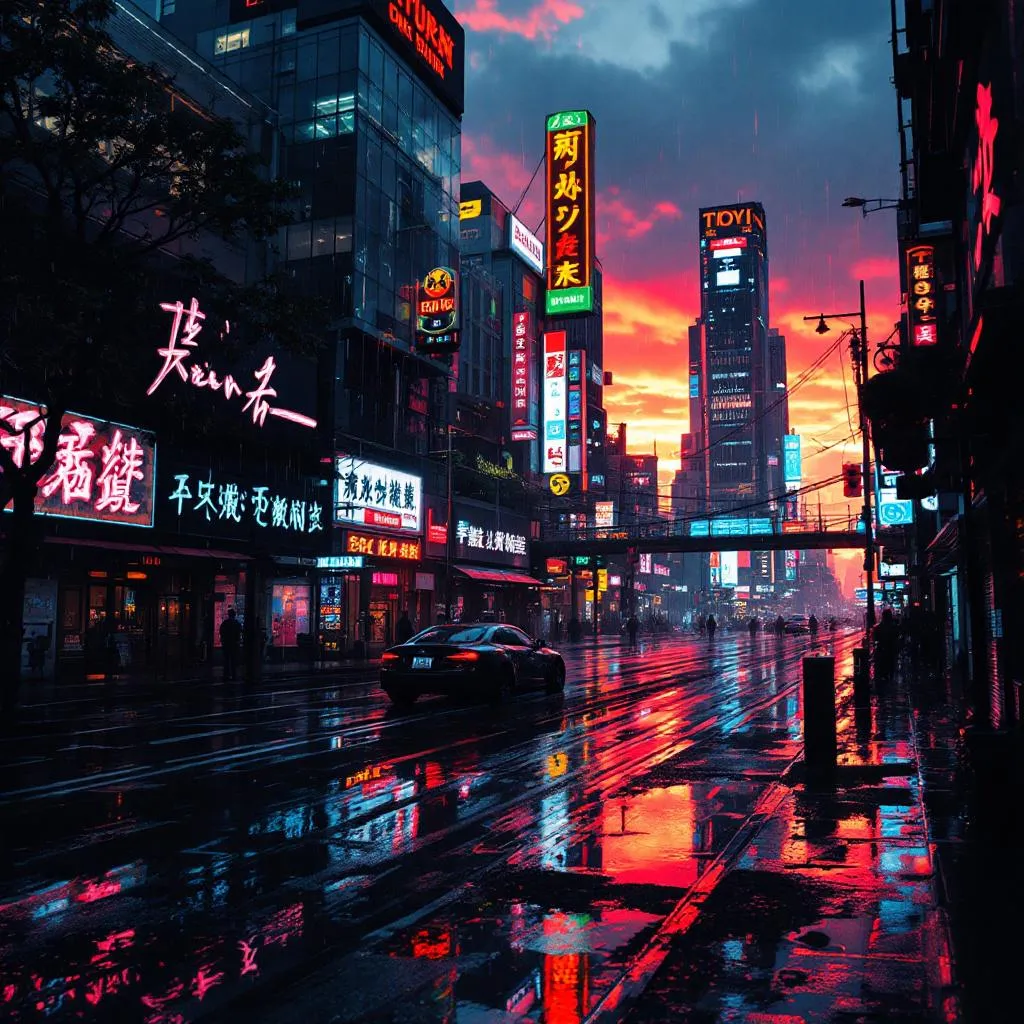
"A cyberpunk cityscape at sunset with neon signs reflecting in rain puddles, wide angle, cinematic atmosphere, highly detailed"
DALL-E 3: Vibrant, eye-catching composition with strong neon colors. Has an illustrative, concept-art quality rather than photorealistic. Reflections in puddles are present but simplified. Overall more like a digital painting.
FLUX Pro: Moody, cinematic atmosphere with realistic wet-surface reflections. Neon light scattering through rain is physically accurate. Architecture has convincing depth and scale. Looks like a still from a high-budget sci-fi film.
Why Tie wins: While both produced compelling images, FLUX Pro achieved photorealistic cinematic quality while DALL-E 3 leaned more toward digital illustration. The light physics — reflections, scattering, atmospheric haze — were far more accurate in FLUX Pro's output.
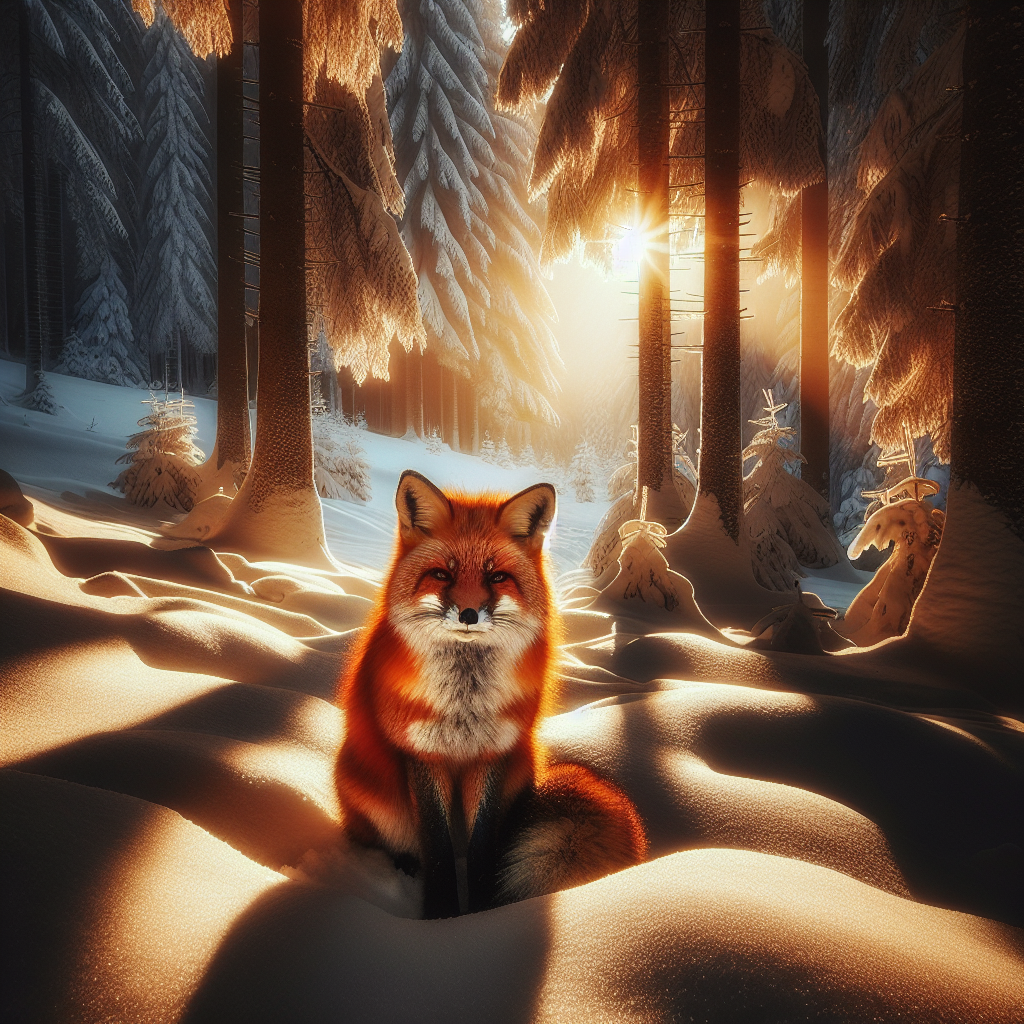
"A red fox sitting in a snow-covered forest clearing, golden hour sunlight filtering through pine trees, wildlife photography"
DALL-E 3: Charming image with correct fox anatomy and winter setting. Fur texture is visible but uniform — lacks the variation between guard hairs and undercoat. Snow looks slightly plastic. Sunlight effect is pleasant but generic.
FLUX Pro: Exceptional wildlife photography quality. Fox fur shows realistic color gradation from red to white with individual hair detail. Snow has proper crystalline texture with accurate light transmission. Golden hour light creates convincing warm-cool contrast on the scene.
Why Tie wins: FLUX Pro's rendering of natural textures — fur, snow, bark, light filtering through trees — was dramatically more photorealistic. The image has the quality of a National Geographic photograph, while DALL-E 3's output reads as a skilled digital illustration.
Visual Output Comparison




Which Should You Choose?
Bottom Line
More Use Cases
Test it yourself
Compare DALL-E 3 and FLUX Pro for photorealism with your own prompts — free.
Try NailedIt.ai →